
The complete guide
Caffeine-free but still coffee: how decaffeinated mushroom coffee is made
"Decaf" has a bad reputation, most of it earned by cheap, over-processed coffee. A caffeine-free coffee can be excellent — Rå Hygge is built to prove it — but only if you understand what removing the caffeine does and how to brew what's left.
How caffeine gets removed
Caffeine is drawn out of the green beans before roasting, using water and natural processes. Done well, it takes the caffeine and leaves most of the flavour; done cheaply, it strips character too. Starting from a good Peruvian Arabica, as Rå Hygge does, is what keeps the cup interesting.
Why medium-light suits a caffeine-free bean
Dark roasting can mask a thin decaf, but it also flattens the delicate flavours. Rå Hygge goes medium-light instead, which keeps the balanced acidity, subtle sweetness and gentle umami the beans actually have. It's a confident choice — you only roast light if the coffee underneath can take it.
When a caffeine-free cup earns its place
- Evenings. The obvious one — the taste and ritual of coffee with no bedtime cost.
- Second and third cups. Keep the morning caffeine, go caffeine-free after lunch.
- Caffeine sensitivity or pregnancy. Common reasons people want the flavour without the stimulant (check anything health-specific with your own GP).
Lion's Mane without the caffeine crutch
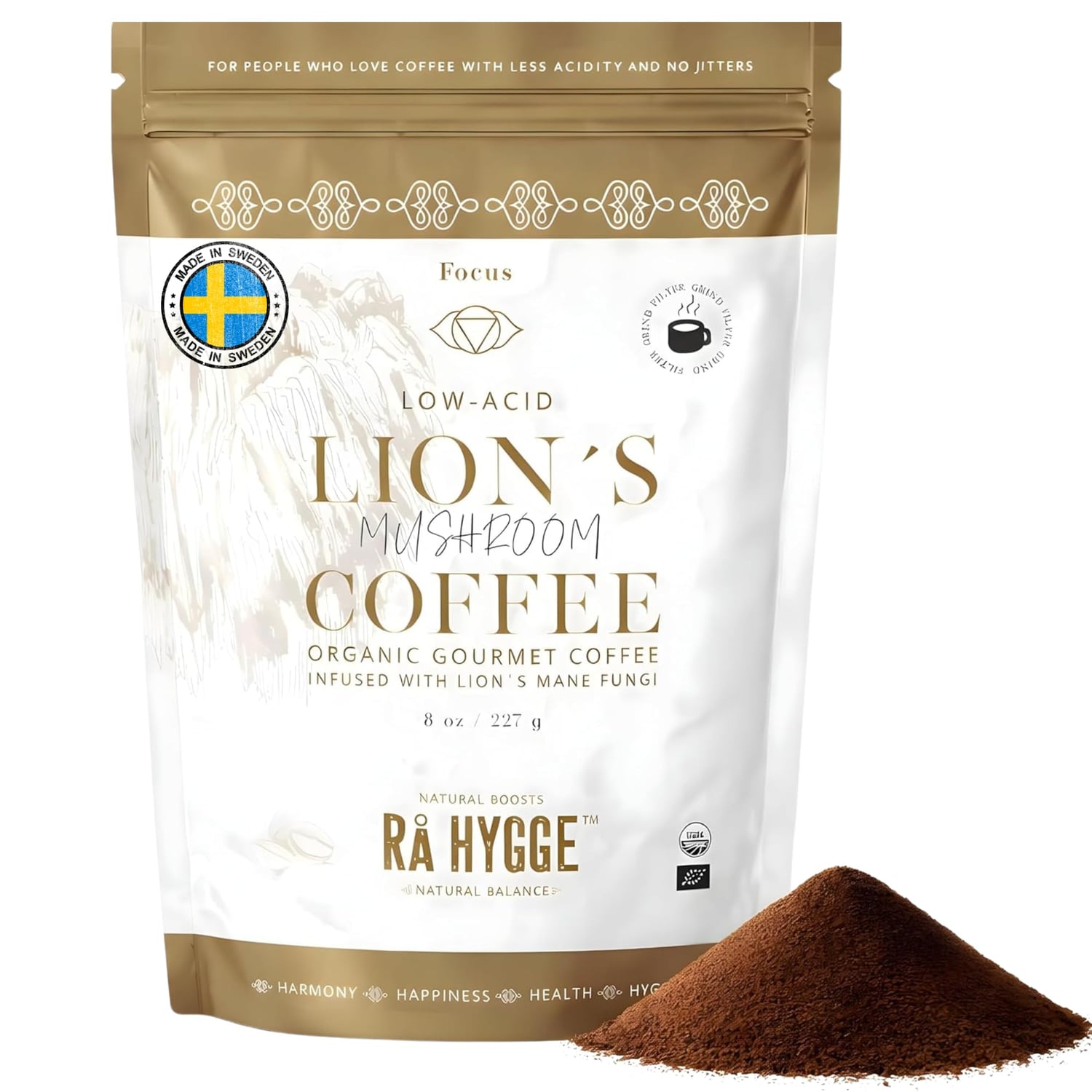
Most functional coffees lean on caffeine for their "lift." Strip that out and the Lion's Mane has to stand on its own — which is rather the point. Dual-extracted for a fuller compound profile, it's here for the focus association many people value, in a cup that won't keep you awake. Brew it low-acid and smooth, and you've got a genuinely nice evening coffee that happens to be functional.