
The complete guide
Instant vs micro-ground: how to get a barista-style cup from a jar
The gap between "instant coffee" and "a coffee you actually enjoy" is usually the processing, not the beans. Nutrilic's answer — micro-ground coffee — is worth understanding, because it's the reason this jar tastes more like a café than a canteen.
Instant, micro-ground and ground, briefly
- Instant is coffee that's been brewed then dried to a soluble powder. Convenient, but flavour is lost in the drying.
- Ground is just the bean, milled. Full flavour, but you need to brew it.
- Micro-ground splits the difference: real ground coffee milled ultra-fine and blended into the instant, so it dissolves but keeps more of the body and aroma of ground coffee.
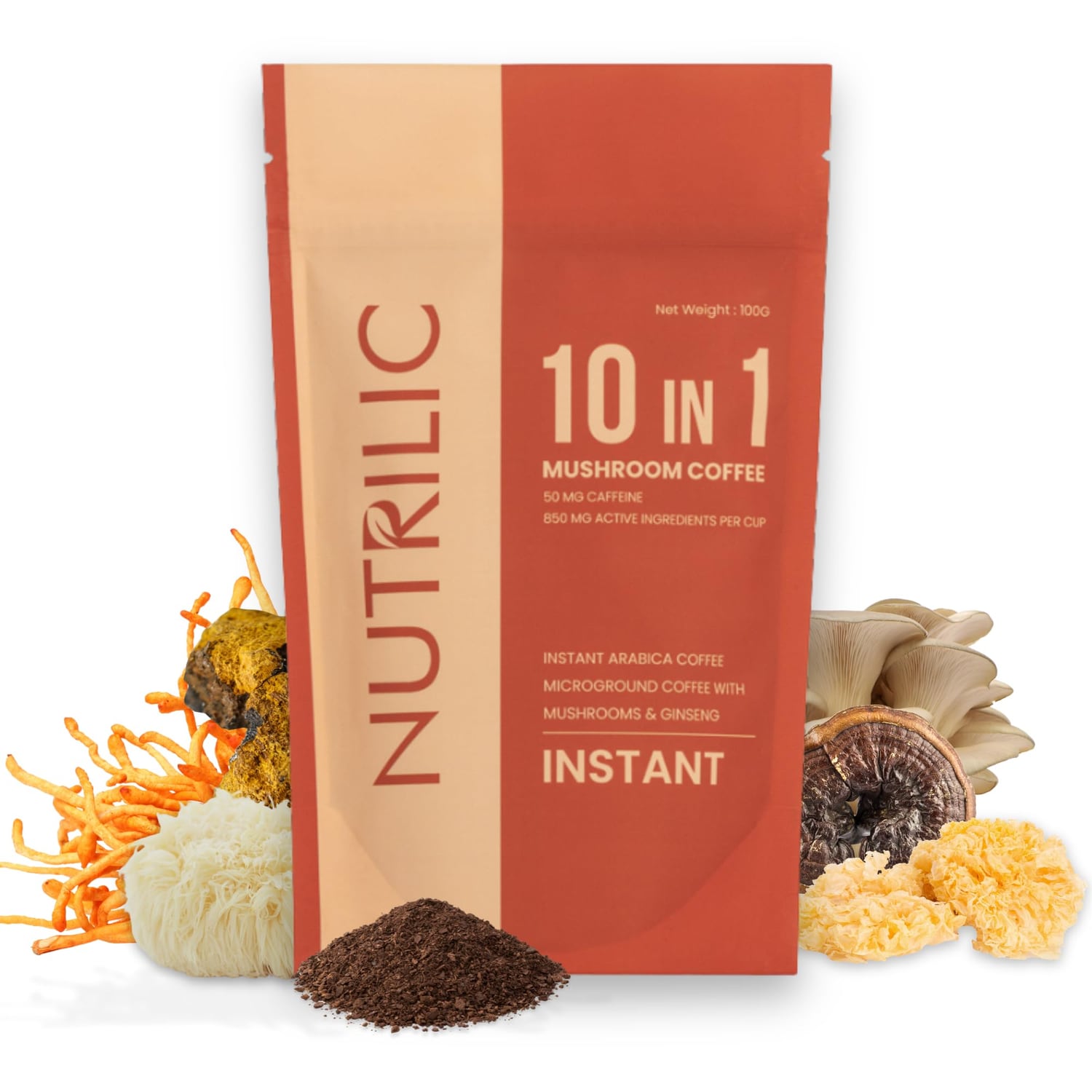
Nutrilic blends micro-ground into instant Arabica, which is why the cup has more depth than a standard jar.
Getting the best cup from it
Micro-ground rewards a little care:
- Use water just off the boil, not fully boiling, to avoid scorching the grounds.
- Stir for a few seconds — the micro-ground fraction needs a moment to disperse.
- A tiny amount of milk or oat milk brings out the body; it also makes a good iced coffee.
Ten extracts without the earthy taste
The reason a ten-extract blend works here is that the coffee is strong enough to carry it. Eight mushrooms plus ginseng would overwhelm a weak base; on this micro-ground blend they sit underneath a proper coffee flavour. Nutrilic's claim of "no mushroom taste" holds up because the coffee is doing real work.
What "no fillers" buys you
Cheaper blends pad their weight with maltodextrin or other carriers. Nutrilic states none, which means the grams in the pouch are coffee and active extracts. Over forty servings, that's a meaningful difference in what you're actually paying for.