
The complete guide
Decaf done properly: what solvent-free decaffeination and a COA really mean
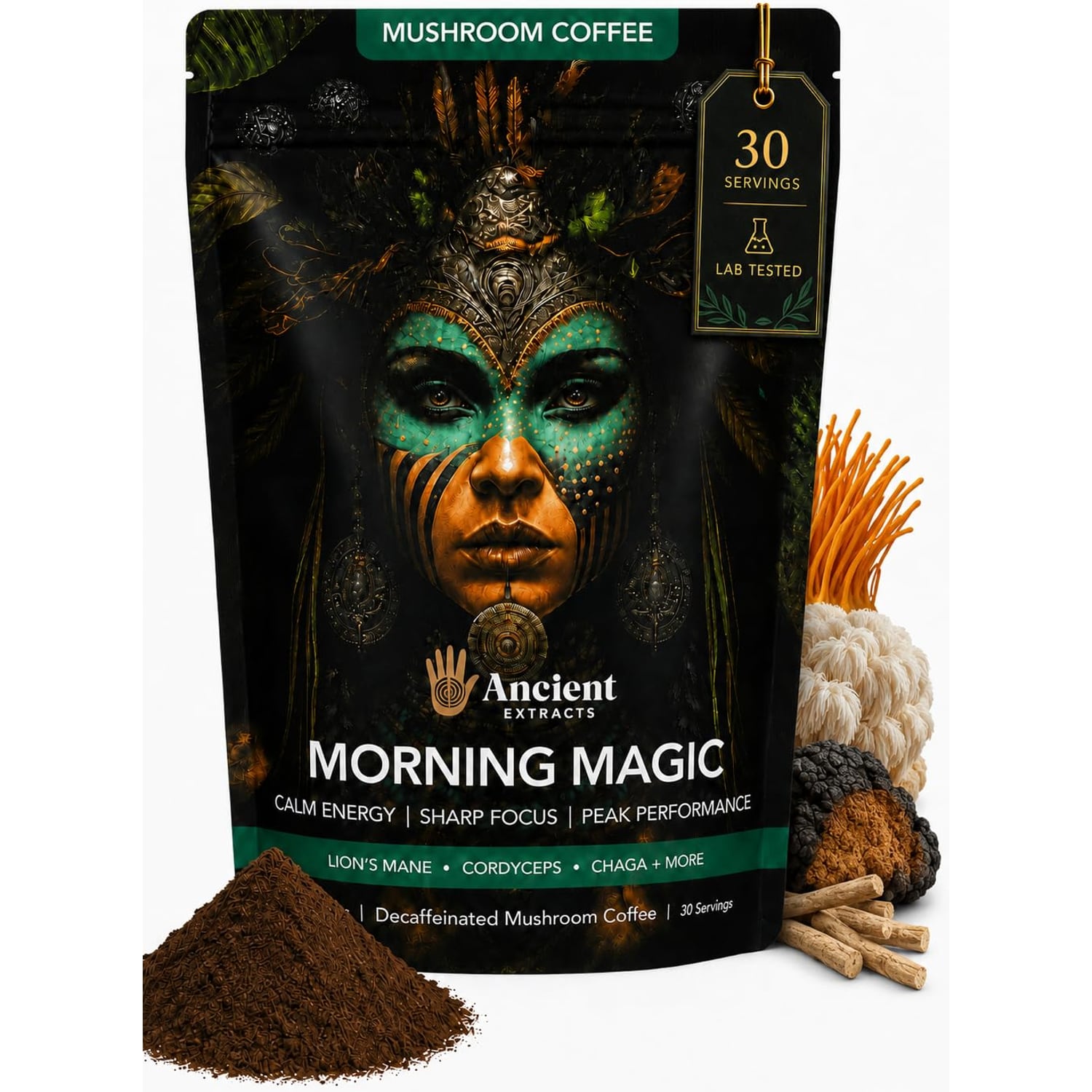
Decaf mushroom coffee is a small but important niche: it's for the people caffeine genuinely doesn't suit, or who want a functional cup after dinner. Morning Magic is one of the more serious ones, and two phrases on the pack explain why — "solvent-free" and "COA."
Why "solvent-free" decaf matters
There are a few ways to remove caffeine. Some use chemical solvents; better methods use water or CO2. Morning Magic is naturally decaffeinated without solvents, which is the cleaner route and the reason it can position itself as a genuinely wholesome evening cup rather than a compromise.
What a COA actually is
A Certificate of Analysis is a lab document showing what's in the product — and what isn't. Ancient Extracts includes one and tests for microbes, pesticides and heavy metals. For concentrated mushroom extracts, that transparency is worth real money; it's the difference between "trust us" and "here's the proof."
The strength behind the decaf
Being decaf doesn't mean weak on the functional side. This is a 15:1 extract — highly concentrated — standardised to at least 30% beta-glucans, using only fruiting bodies. Most blends never state a beta-glucan figure at all, so a guaranteed 30% is a strong quality signal.
Getting the evening cup right
- Mix 8g (two scoops) into hot water, then build a latte, cappuccino or mocha as you like.
- Its mild chocolatey, earthy notes take milk well for a comforting nightcap.
- Because it's caffeine-free, you can have it late without watching the clock.
The whole point of Morning Magic is that "functional coffee" and "good night's sleep" stop being a contradiction. Lab-tested, solvent-free and properly dosed, it's decaf for people who refuse to settle for bad decaf.