
The complete guide
Reading a mushroom-coffee label: what 5g a serving really has to fit in
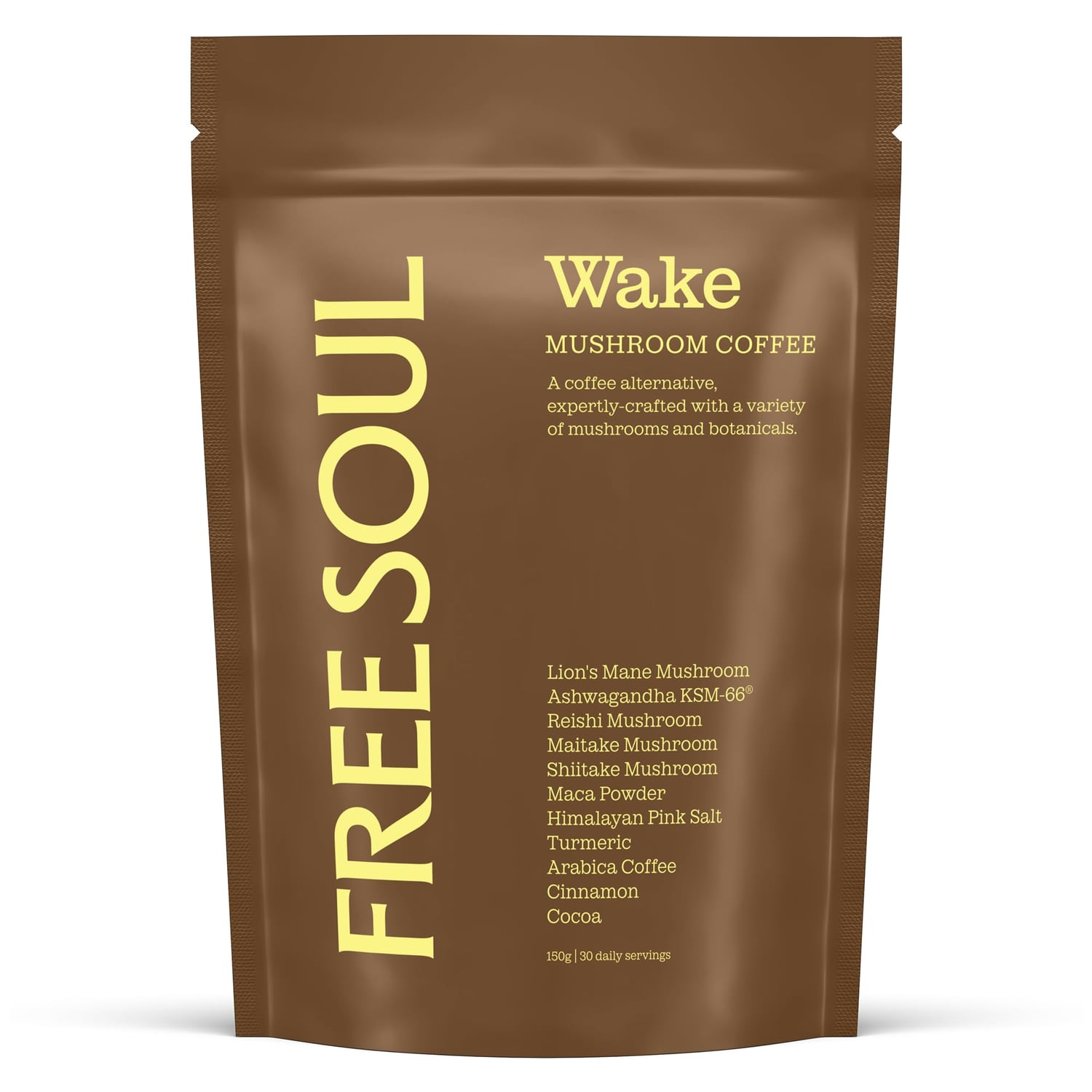
A mushroom coffee serving is tiny — around 5g, less than a heaped teaspoon. Free Soul Wake fits four mushrooms, an adaptogen, cacao, maca, salt and coffee into that spoon, which raises a fair question: how much of anything is really in there, and does a longer list mean a better cup?
Grams, not just ingredient counts
The number of ingredients on the front of a pack tells you less than the grams behind each one. A 5g serving that lists ten things has to divide 5g between them and the coffee. That isn't a criticism of Wake — it is a reason to read past the headline and look at what the brand actually foregrounds: Lion's Mane and KSM-66 ashwagandha, the two it doses meaningfully.
What each headline ingredient is for
- Lion's Mane — the focus mushroom, the anchor of the blend.
- Reishi, Maitake, Shiitake — a supporting cast traditionally used for a rounded, calmer profile.
- KSM-66 ashwagandha — a branded, well-studied ashwagandha extract, used here for a steadier feel.
- Cacao, cinnamon, maca, pink salt — flavour and body, and the reason it tastes like a spiced coffee rather than soil.
Why "tastes like coffee" is the real selling point
All the ingredients in the world are useless if the pouch ends up unopened at the back of a cupboard. Free Soul's promise that Wake tastes of coffee and cinnamon, not mushrooms, is what makes the long ingredient list count — you'll actually drink it.
Why independent testing is worth noting
Because these blends concentrate plant and fungal material, testing for heavy metals, PAHs and pesticides is a genuine quality signal. Free Soul lists that testing openly. We flag it as a feature of the product; it isn't a health claim, just a sign the maker is doing the checks.